Why Should You Consider the XPENG G6 When Searching for electric cars australia?
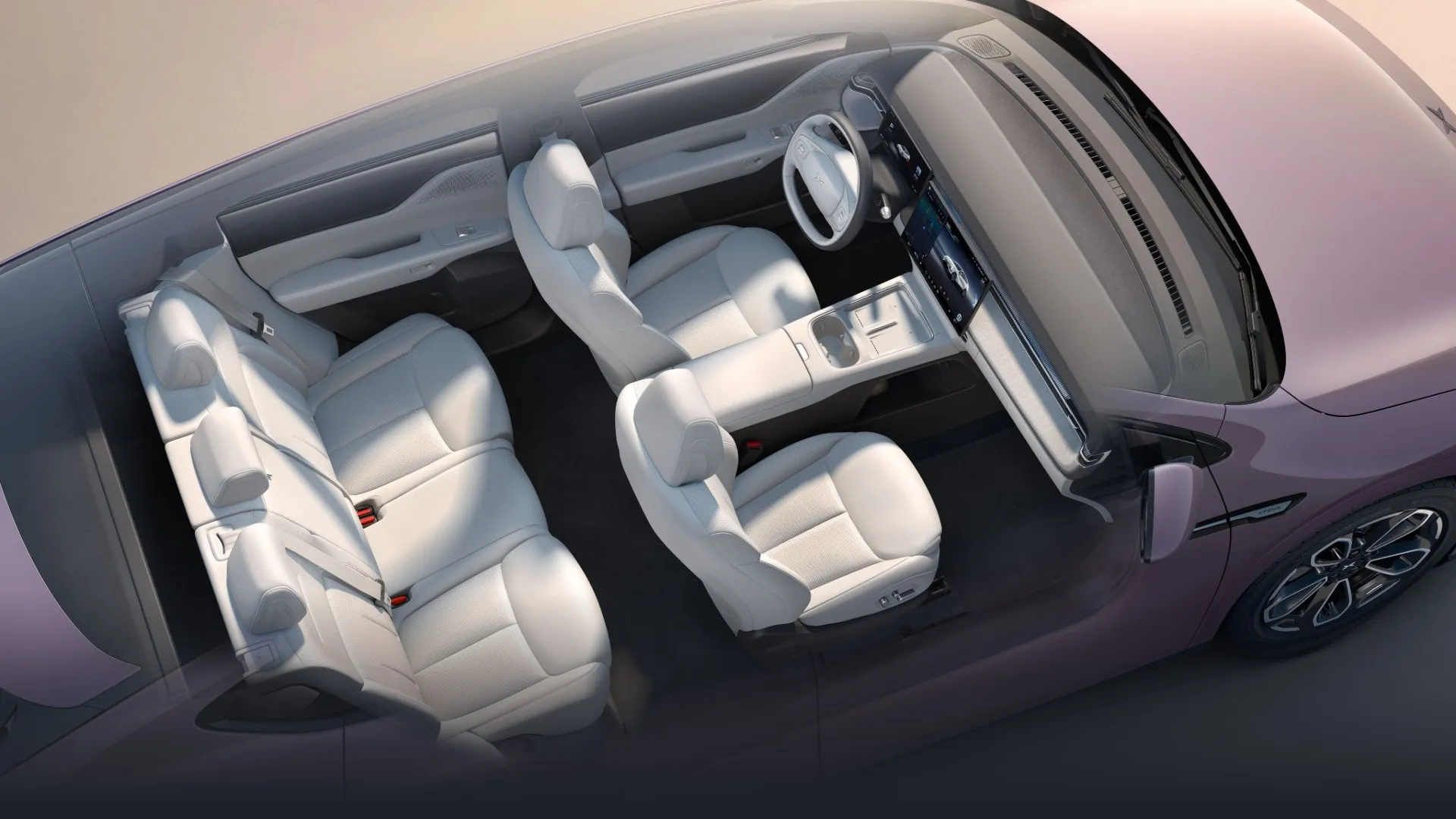
For Australians comparing electric SUVs, the XPENG G6 combines up to 525 km WLTP range, 451 kW DC charging and a 12-minute 10–80% charging claim in its Long Range specification. The 2026 Australian range uses LFP batteries, an 800V electrical platform and rear- or all-wheel drive. Depending on the version, output spans 185–358 kW, while boot capacity is 571 litres with the rear seats upright. Buyers also get 11 kW AC charging, CCS2 compatibility, seven airbags, a 15.6-inch touchscreen and a 7-year/unlimited-kilometre private-use vehicle warranty, giving the G6 a broad set of measurable specifications for daily and interstate use.
Anyone researching electric cars australia will usually start with range, but usable range depends on battery capacity, energy consumption, wheel size, road speed and charging access. The Australian G6 RWD Long Range has an 80.8 kWh gross LFP battery and a WLTP rating of 525 km on 20-inch wheels. Official consumption is 17.9 kWh/100 km, while the AWD Performance version uses the same 80.8 kWh battery, records 18.4 kWh/100 km and has a 510 km WLTP rating.
Those figures place less emphasis on carrying an oversized battery and more on using stored energy efficiently. The Standard Range illustrates that approach with a 68.5 kWh LFP battery, while selected configurations can consume about 16.6 kWh/100 km. A driver covering 15,000 km in a year at 17.9 kWh/100 km would use roughly 2,685 kWh before charging losses. At an illustrative residential electricity rate of A$0.30/kWh, the electricity component would be about A$806 annually, although tariffs, solar use, climate and charging losses can change the real figure.
Charging performance becomes more important once trips extend beyond normal commuting. The RWD Long Range and AWD Performance support DC charging at up to 451 kW, with XPENG listing approximately 12 minutes for 10–80% under suitable charger and battery conditions. Moving through 70% of an 80.8 kWh gross pack represents roughly 56.6 kWh of nominal battery capacity, although the usable amount and charging curve are not identical to a simple capacity calculation.
A 451 kW peak does not imply the car will receive 451 kW throughout a 12-minute session. Battery temperature, charger output, state of charge and thermal management alter the charging curve.
That distinction matters in Australia because public chargers have different maximum outputs. Connecting a 451 kW-capable vehicle to a 150 kW charger does not turn the charger into a 451 kW unit. On a lower-powered site, the G6 simply charges within the available limit. The benefit of its 800V platform becomes more apparent where newer high-output hardware is available, particularly during trips where several charging stops may occur in one day.
Home charging works differently. All three Australian G6 variants support 11 kW AC charging. XPENG lists about 9.2 hours for a 5–100% AC charge on the 80.8 kWh Long Range and Performance versions. A household using overnight charging therefore does not need public DC speeds for ordinary daily use. Someone driving 50 km per weekday would cover about 13,000 km across 260 commuting days, far below the 525 km WLTP figure per full charge, although real road range should never be assumed to equal laboratory range.
Performance also changes substantially between versions. The RWD Standard Range produces 185 kW and 440 Nm and reaches 100 km/h in about 6.94 seconds. The RWD Long Range increases output to 218 kW with the same 440 Nm torque figure and records about 6.7 seconds. The AWD Performance raises output to 358 kW and 660 Nm, reducing the 0–100 km/h time to 4.13 seconds.
| Australian G6 version | Battery | Power | WLTP range | DC charging |
|---|---|---|---|---|
| RWD Standard Range | 68.5 kWh LFP | 185 kW | up to 480 km* | up to 382 kW |
| RWD Long Range | 80.8 kWh LFP | 218 kW | 525 km | up to 451 kW |
| AWD Performance | 80.8 kWh LFP | 358 kW | 510 km | up to 451 kW |
*Range varies with wheel specification. Manufacturer figures should be checked against the exact vehicle configuration before purchase. Official Australian specifications current in 2026 list 20-inch wheels as standard on Long Range and AWD Performance models.
Straight-line acceleration is only one part of how a 2-tonne electric SUV behaves. The Long Range has a listed kerb weight of 2,115 kg, while AWD Performance rises to 2,220 kg, a difference of 105 kg or about 5%. The G6 uses double-wishbone front suspension and a multi-link arrangement at the rear, with ventilated disc brakes on both axles. Its listed turning radius is 5.8 metres, useful when comparing a 4.75-metre-class SUV for parking garages and suburban streets.
Aerodynamics help explain how the vehicle manages energy at motorway speeds. XPENG lists a drag coefficient of 0.248 Cd. Aerodynamic resistance rises with the square of vehicle speed, so electricity use generally increases noticeably at sustained highway speeds. A 525 km WLTP figure therefore should not be read as a promise of 525 km during every 110 km/h motorway trip. Wind, rain, temperature, tyre pressure, wheel choice and cabin heating or cooling all influence actual distance.
Cabin and luggage measurements are easier to compare because they are not affected by weather. The G6 provides five seats and 571 litres of boot space, increasing to 1,374 litres with the rear seats folded. That is an 803-litre increase, or roughly 141% more stated cargo volume after folding the second row. Payload is listed at about 475 kg for the Long Range and 470 kg for the AWD Performance, figures worth checking for households regularly carrying four adults plus luggage.
The electrical system can also supply external equipment. Long Range and Performance specifications list vehicle-to-load output of up to 6 kW. A 1,500 W appliance running continuously for two hours would consume about 3 kWh before conversion losses, less than 4% of an 80.8 kWh gross battery. Actual use should follow manufacturer instructions and equipment ratings, but the feature can be useful for powered camping equipment, portable work equipment and outdoor appliances.
Inside, information is split between a 10.25-inch instrument display and a 15.6-inch central touchscreen. Apple CarPlay and Android Auto are listed, alongside Bluetooth phone-key access, NFC card access, navigation, over-the-air software updates and app-based functions. A 15.6-inch screen has around 54% more diagonal measurement than a 10.1-inch display, although screen size alone says little about menu design or ease of use while moving.
The assistance package covers routine motorway, traffic and parking tasks rather than replacing the driver. Australian specifications list adaptive cruise control, lane-centering support, lane-keeping assistance, lane-departure warning, blind-spot monitoring, forward-collision warning, automatic emergency braking, rear cross-traffic alert and driver-state monitoring. Parking equipment includes a surrounding-view camera system and assisted parking functions, while the cabin specification includes seven airbags and rear ISOFIX mounting points.
Assistance systems should be treated as support features. Speed limits, lane markings, weather, camera visibility and road geometry can affect how well individual functions operate.
Ownership terms deserve as much attention as battery or acceleration data, particularly for a relatively new vehicle range in Australia. XPENG Australia states that privately used vehicles receive a 7-year/unlimited-kilometre whole-vehicle warranty. Commercial use is covered for 7 years or 160,000 km, while the traction battery, battery-management system, drive motor and Intelligent Power Unit are covered for 8 years or 160,000 km.
Scheduled maintenance is listed at every 12 months or 20,000 km, whichever arrives first. A private owner travelling 15,000 km per year would normally reach the 12-month interval before the distance limit, while a 30,000 km-per-year driver would reach 20,000 km after roughly eight months. XPENG also states that roadside assistance runs for seven years from first registration and covers much of Australia, subject to program conditions.
Battery chemistry is another practical ownership consideration. XPENG states that every vehicle it sells in Australia, including the New G6, uses lithium iron phosphate battery chemistry. LFP packs are generally selected for thermal stability and cycle life, while manufacturers use battery-management and thermal-control software to manage charging and temperature. XPENG's 2026 guidance recommends following the vehicle's battery-care instructions rather than applying charging habits from a different battery chemistry or another brand.
Wheel choice also deserves attention before comparing brochure figures. On EVs, larger wheels can raise aerodynamic and rolling losses, and the Standard Range specification demonstrates the difference: official range can vary by wheel fitment, with the highest figure associated with the smaller wheel configuration. A buyer doing 20,000 km each year may care more about energy consumption and tyre replacement cost than reducing a 0–100 km/h run by several tenths of a second.
Australian conditions also make thermal management relevant. Summer road temperatures, sustained motorway travel and repeated DC charging place different demands on a battery than mild-weather urban commuting. The G6's 800V architecture and 5C-rated LFP battery are designed to accommodate high charging rates, but a claimed 12-minute 10–80% session still depends on suitable battery temperature and a charger capable of supplying the required power.
Price comparison should therefore use the exact variant rather than treating every G6 as one specification. XPENG Australia's configurator listed the AWD Performance at A$63,800 when checked in September 2026, while equipment, pricing and availability can be changed by the manufacturer. On-road costs, registration, insurance, home-charger installation and electricity tariffs should be added separately when comparing ownership budgets.
For a household travelling 15,000–20,000 km per year, the RWD Long Range offers the specification most focused on distance: 525 km WLTP, 17.9 kWh/100 km consumption, 218 kW output and a 451 kW charging ceiling. The AWD Performance gives up 15 km of listed WLTP range, about 2.9%, while adding 140 kW and 220 Nm. Buyers choosing between them are therefore comparing measurable differences in range, energy use, acceleration, mass and price rather than choosing between fundamentally different cabin layouts.